

From £0 to £1.6M in Sales — and How We Did It
How we scaled The Boot Buddy from launch-stage to £1.6M in Shopify revenue (and ~£3M with Amazon) in eight months — using aggressive Facebook & Instagram media buying, broad-audience targeting, and disciplined creative refresh.
01 — CAMPAIGN OVERVIEW
A Technical Scale, Done Right
The Boot Buddy is a portable shoe-cleaning brush that genuinely solves a common problem. The product had previous media coverage which we used as social proof inside our prospecting video creatives. Reviews were strong, the pixel was warming, and the audience was clearly there.
What it lacked was a media buying engine that could scale aggressively without burning the unit economics. That’s what we built.
Over eight months, ad spend went from £50/day to £17,000/day. Shopify hit a record £35K in a single day. Total Shopify revenue closed at £1.6M, with another ~£1.4M coming through Amazon — taking the brand to roughly £3M overall and turning it into a household name in the UK shoe-care category.
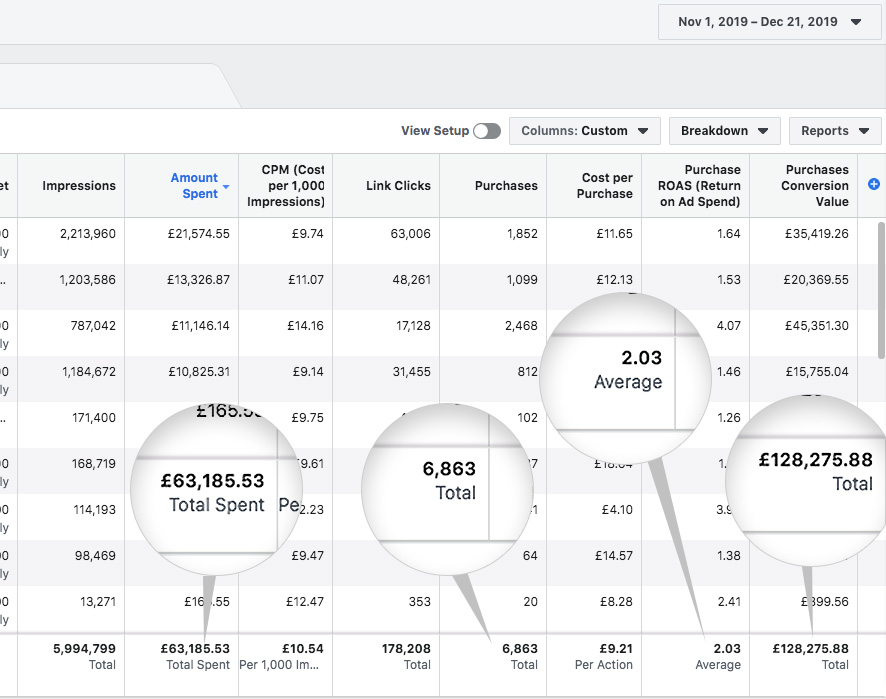
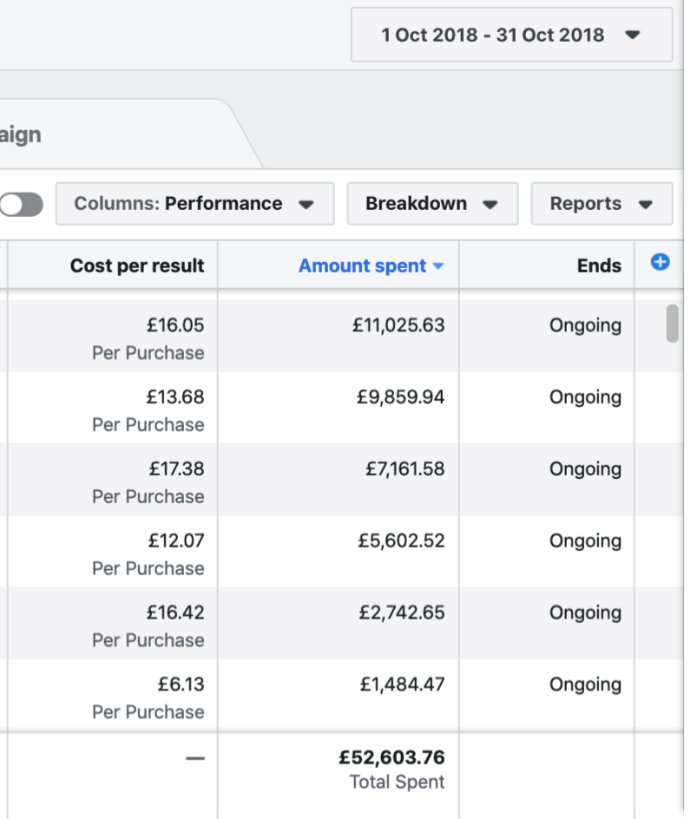
Facebook Ads Manager — campaign performance during the scale
02 — THE FOUNDATION
Get Clear on the Numbers
Most businesses we take on don’t have a clean view of their unit economics. Without that, you can’t scale — you just spend. Before touching the ad accounts we built a financial model covering:
- COGS, fulfilment, shipping, warehousing
- Ad spend, merchant fees, VAT and tax
- Product price points and margin per SKU
From that we found the break-even CPA. The client was optimising purely for purchases, not awareness or reach, so we set an initial target CPA of £12 — comfortable inside the margin and still aggressive enough to allow scale.
03 — WEBSITE CONVERSION
3% to 5.5% Conversion Rate
You can’t scale a leaky funnel. Before pushing budget we made three changes to the site:
- Customer reviews added prominently. Social proof is the fastest conversion lift available — if other people are doing it, it must be good.
- Longer product descriptions and richer landing/product page content. This combats bounce rate and signals quality to the Facebook pixel — better dwell time means better quality scores and cheaper traffic.
- Mobile-first redesign. 90%+ of traffic was mobile. We made CTA buttons thumb-sized, used contrast colours to draw the eye to checkout actions, and stripped anything that didn’t drive purchase.
Conversion rate moved from 3% to 5.5%. That single change dropped CPA enough to unlock the scale that followed.
04 — CREATIVE VELOCITY
Video Ads, Constantly Refreshed
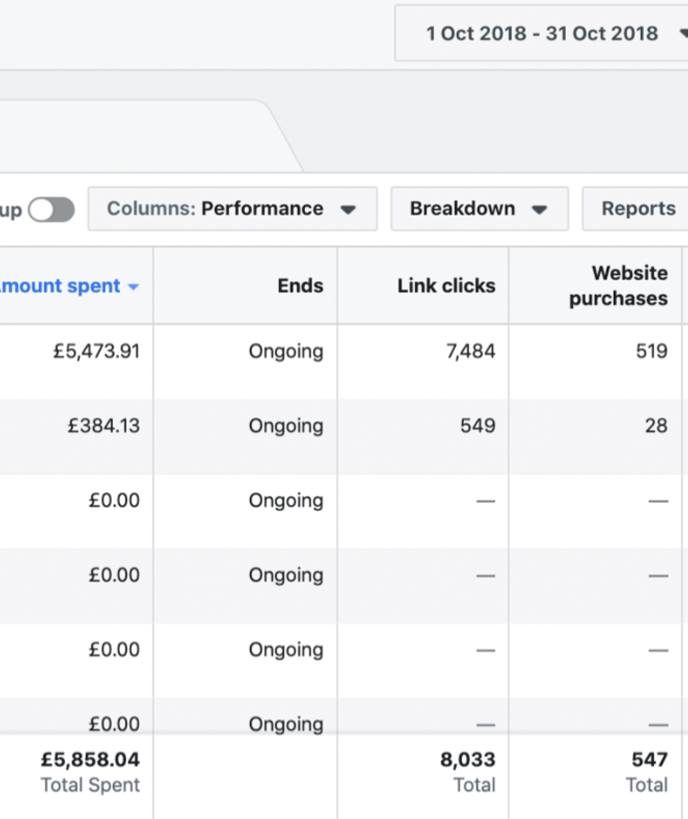
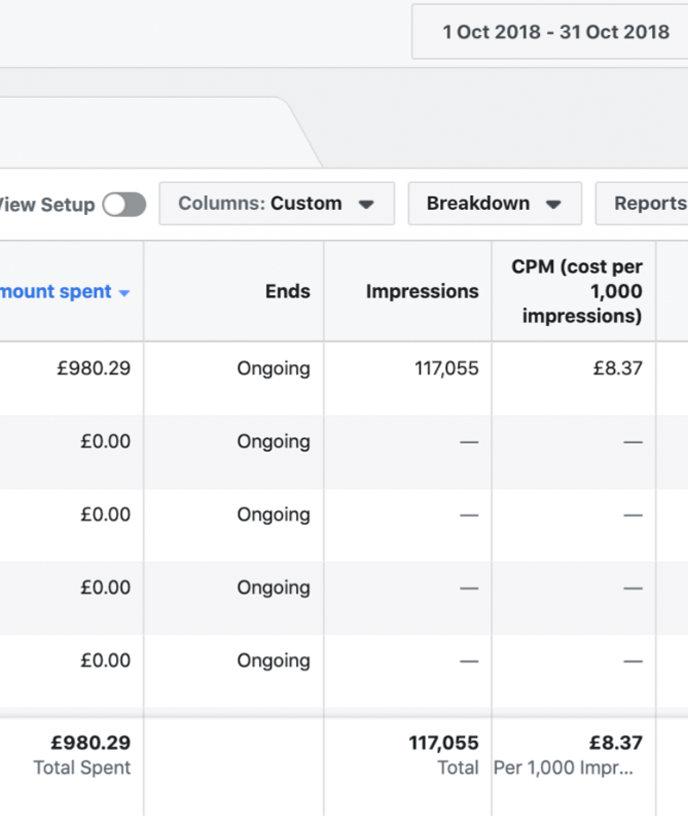
At this volume, video is non-negotiable. Better CPMs, better CPCs, more room to open the campaigns. We ran around 10 video creatives at the same time, refreshed constantly to fight ad fatigue. Larger campaigns we run today often have 20–30 prospecting videos in rotation.
Initial benchmarks we look for when testing creatives:
- CTR (all): minimum 3%
- CTR (link): minimum 1.5%
- CPC: under £1
- Strong engagement signals — shares, comments, organic reach
If those are in place, the creative is ready to scale.
05 — TARGETING
Broad Wins. Narrow Loses.
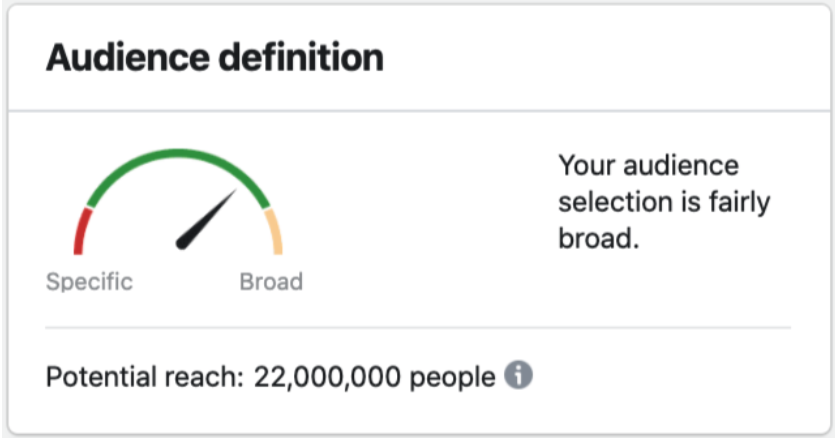
Most advertisers make the mistake of using small, hyper-narrowed audiences. They get some results, but they cap out fast. Our approach is the opposite — we go as broad as possible, especially once the pixel has 1,000+ purchase events.
To scale to £10K+/day in spend on UK CPMs, you need an audience above 10 million people. At £10K/day that’s roughly 1M reach a day. Anything smaller hits diminishing returns by week two.
Our targeting mix on Boot Buddy:
- Interest-based targeting initially, to warm the pixel and get past 1,000 purchase events
- Purchase Lookalikes from 1% to 10% — and we deliberately did not exclude the smaller percentages from the larger ones
- Lookalikes from existing customers running in parallel
- Pure broad targeting (age + gender only) once the pixel was mature
- Feed and Stories separated so we could scale Stories independently later
- Retargeting funnels: engagers, traffic, ViewContent, AddToCart, InitiateCheckout
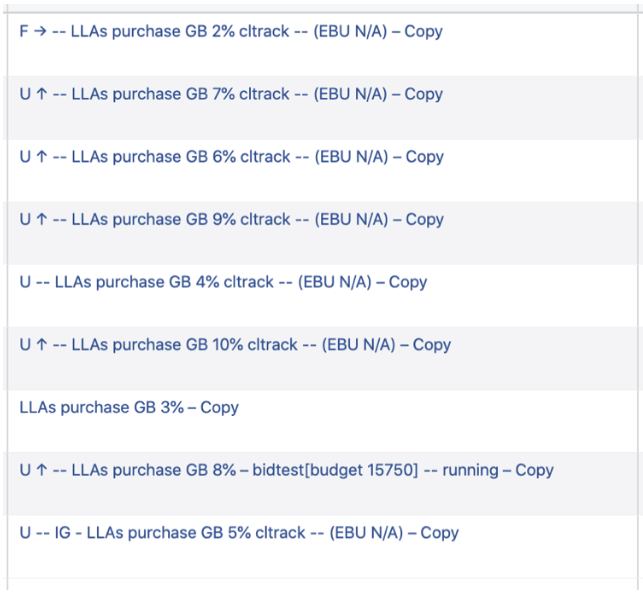
The Lookalike Secret Most Advertisers Miss
Most agencies build LLAs from 100 purchases and wonder why they perform worse than basic interest targeting. Facebook needs at least 5,000 data points to build a meaningful audience — anything below that is noise.
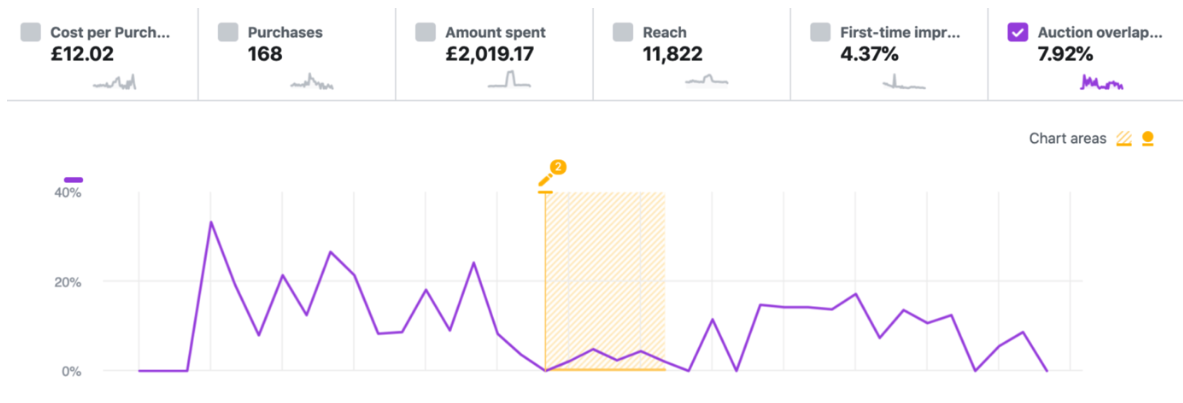
So we waited. Once the pixel had 1,000+ registered sales, we started with the Purchase LLA. Then we layered in IC LLA, ATC LLA, VC LLA, traffic LLAs, and engager LLAs — not because their strength was higher than the Purchase LLA, but because each one drops the ads into a different inventory pool inside Facebook’s auction. Different pools = lower auction overlap = more total reach for the same ROAS.
06 — BUDGET STRATEGY
Lifetime + Daily Budgets in Parallel
Facebook paces lifetime budgets and daily budgets differently. Running both inside the same campaign gives the algorithm more flexibility and reduces auction overlap when you’re hammering the same audiences.
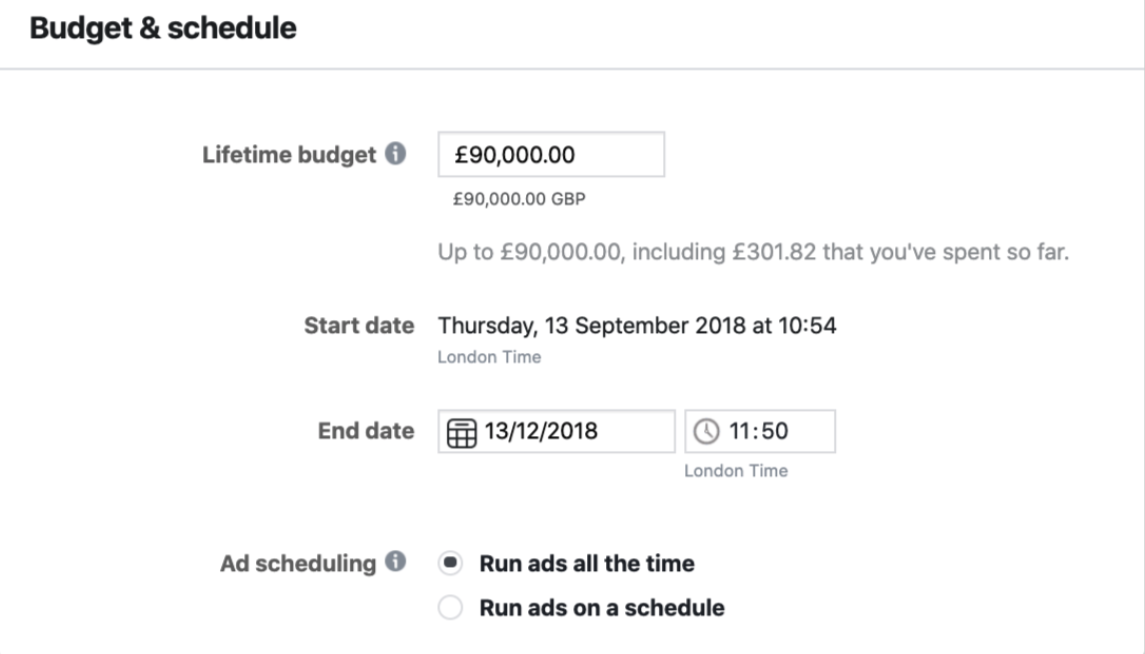
For Boot Buddy we set 90-day lifetime budgets with enough daily floor to keep ad sets out of learning-phase reset. A typical setup: £1,000/day × 90 days = £90,000 lifetime budget. At that spend the ad set was producing roughly 80 sales a day, so even if we made a mid-flight change and cost the ad set its learning phase, it would re-optimise inside 24 hours.
Half the LLAs ran on daily budgets, half on lifetime. The two pacing mechanics together produced a much smoother scale curve than either one alone.
07 — MANUAL BIDS
The One-Two Punch
Automatic bidding has a ceiling. The high-value buyers — the people most likely to convert right now — get won by competitors using manual bids. If you’re only on auto, you never see those impressions.
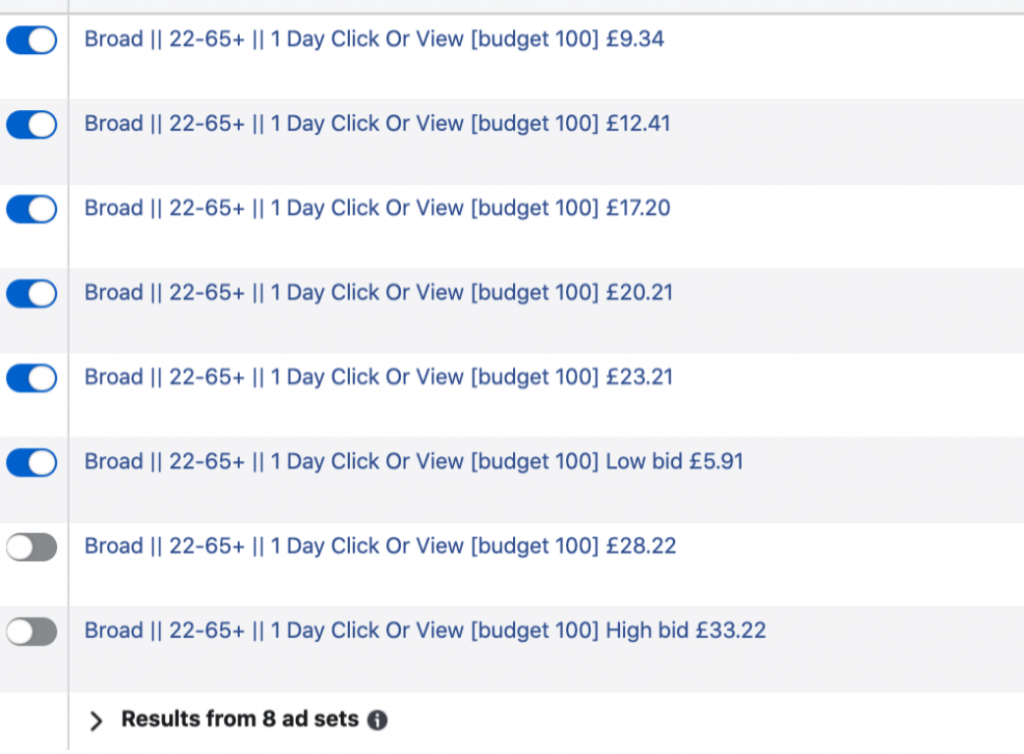
So we ran manual bid tests in parallel: 8 ad sets with bids ranging from our target CPA up to 3–4× our target. The winners showed us the real ceiling on what those audiences were worth, and we used bid caps (not cost caps) to lock in the spots.
08 — THE ACTUAL SCALE
August → December 2018
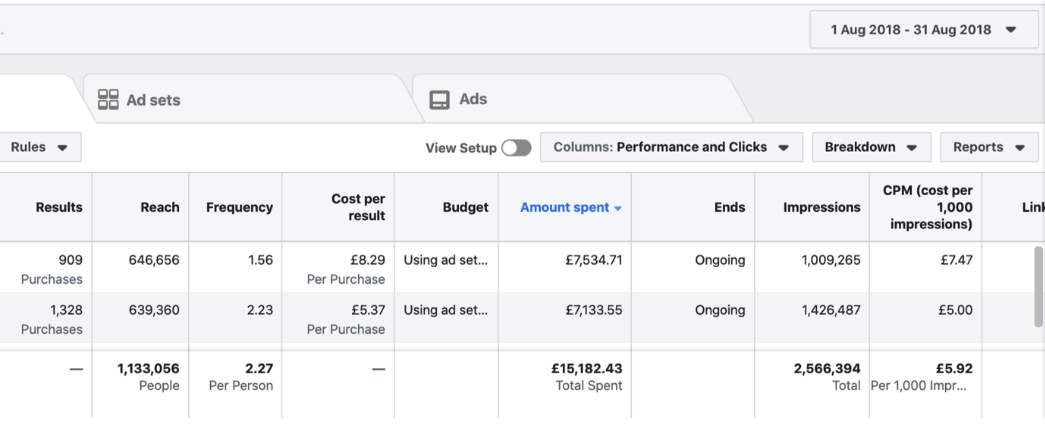
August 2018 — Spent £15,182. Generated £44,190 in tracked sales. Pushed budget hard enough that organic Shopify started compounding (around 50% organic / 50% Amazon split on additional sales we couldn’t attribute directly to ad spend).
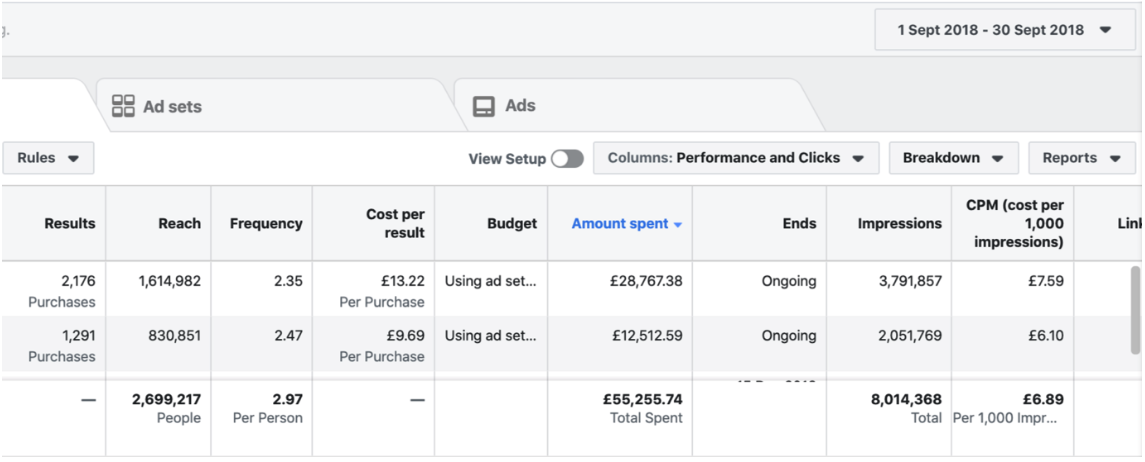
September 2018 — Spent £55K. CPA doubled but stayed inside our target. Hit the first creative fatigue and rebuilt the creative library. Client sold out for the first time.
October 2018 — Spent £59,442. New creatives launched. ROAS held at ~4.5.
November 2018 — Spent £268,060 across three ad accounts. We split into 1 retargeting account + 2 prospecting accounts to keep the CPA-event optimisation clean — retargeting was hitting £7 CPAs and we didn’t want to dilute that with prospecting at £15.
November 2018 — three ad accounts, £268K total spend, 21,000+ tracked purchases
December 2018 — Spent £139,336. Generated £364,841 in tracked Shopify revenue (excluding the ~50% Amazon attribution). Client sold out again.
January 2019 — All stock for the next month sold out. Client chose to pause aggressive scaling to clear the back-order. By that point we’d done what we set out to do.
09 — SCALING CONSIDERATIONS
Things Most Agencies Miss
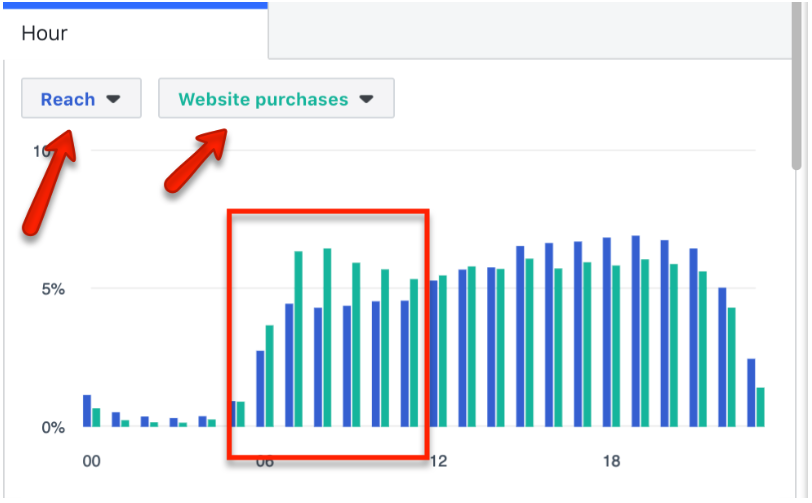
Time-of-day launches. When we rolled out new campaigns, we launched between 6am–12pm UK time. That window has the best reach-to-purchase ratio in our data, which means Facebook grades the ad set higher in its first 24 hours and gives it priority placement going forward.
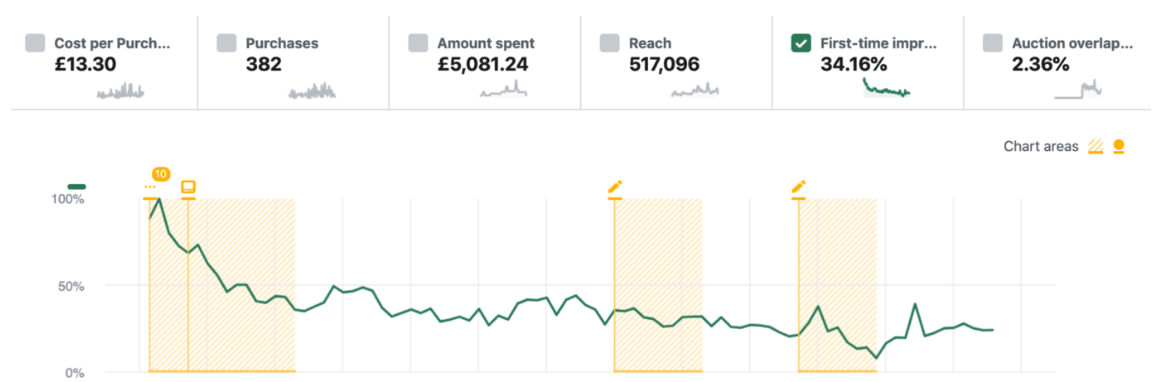
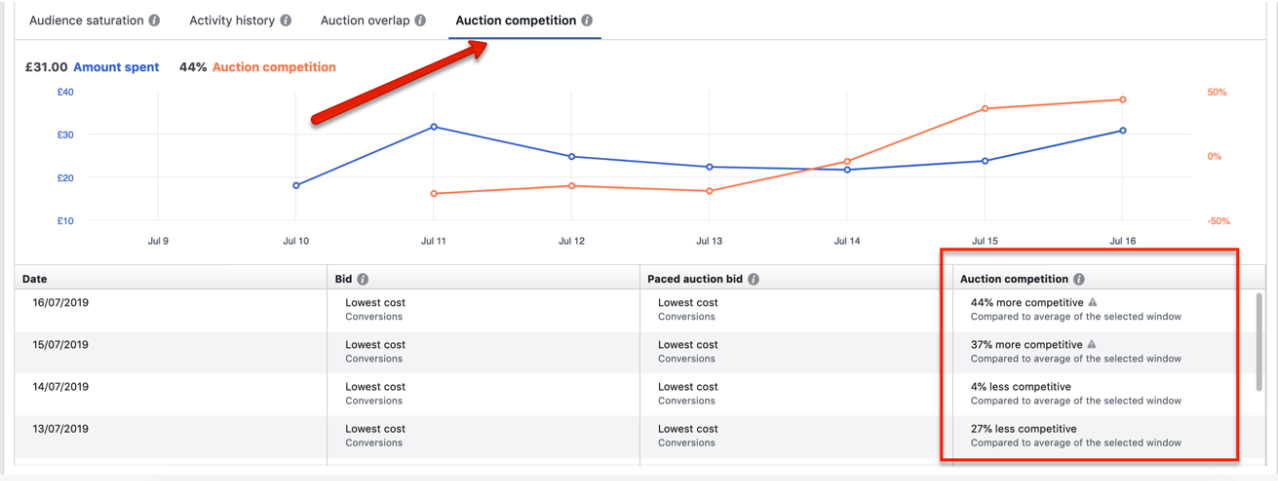
Auction overlap, not audience overlap. Most agencies focus on audience overlap — they see two ad sets targeting the same Lookalikes and panic. The metric that actually matters is auction overlap. We routinely had 100% audience overlap (duplicated ad sets) but under 20% auction overlap, and the campaigns ran fine.
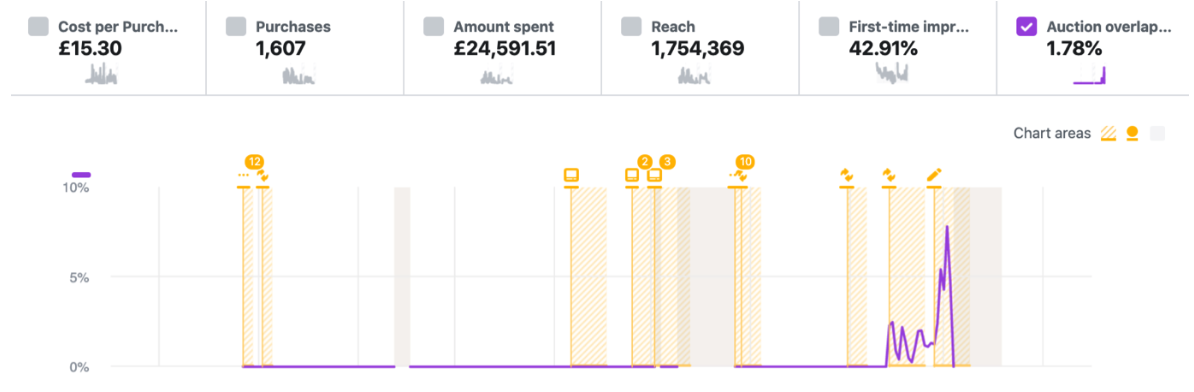
Hourly reach vs. purchases — the 6am–12pm launch window we optimised against
10 — LESSONS
What We’d Tell Any Founder
- Stock issues will happen. Prepare more inventory than you think you need before pushing a campaign. We sold out three times.
- Cashflow gets dangerous fast. Merchant payouts lag spend by days or weeks. Model cashflow before you scale, not after.
- Creative fatigue is inevitable. Have the next batch of creatives ready before you launch the current ones, not after they start dying.
- A 1% conversion rate improvement can double your profits. Optimise the website before you optimise the ads.
- Backend prep matters. Higher AOV and stronger LTV through post-purchase flows could have 10x’d the result. We left that on the table here.
Ready to scale your DTC brand the same way?
If you’ve got a proven product and a real margin to work with, we’ll show you what a properly engineered media buying machine looks like.
Book a Strategy Call